
Meet the axolotl, a unique amphibian that seems straight out of a fantasy novel! This creature can regenerate its limbs and other body parts. It retains its youthful features throughout life, and sports a perpetual smile.
Masters of Regeneration
Axolotls have an extraordinary ability to regenerate lost body parts. If an axolotl loses a limb, tail, or even part of its heart or brain, it can regrow the missing part perfectly—with full functionality and without scarring! This regenerative process involves the activation of cells at the wound site, which then proliferate and differentiate to form new tissues. Scientists are fascinated by this ability and study axolotls extensively to unlock the secrets of tissue regeneration. These insights could have profound implications for human medicine, including healing spinal cord injuries and regenerating damaged organs.
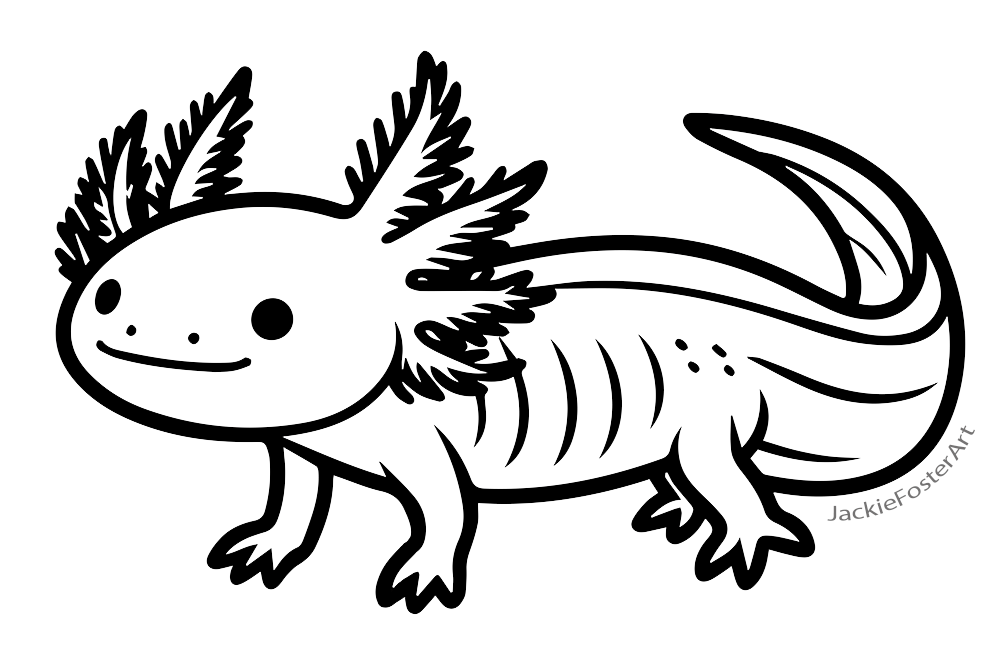
Perpetual Youth
Axolotls exhibit a trait known as neoteny, meaning they retain their juvenile features throughout their adult life. Unlike other amphibians that metamorphose into terrestrial adults, axolotls remain aquatic and keep their external gills, dorsal fin, and larval characteristics. They reach sexual maturity without undergoing metamorphosis, which is rare among amphibians. This perpetual youthfulness not only adds to their charm but also provides valuable insights into developmental biology and evolutionary processes.
Variety of Colors
Wild axolotls typically display dark, mottled colors like brown or black to blend into their natural environment. However, captive breeding has introduced a rainbow of color variations, including:
- Leucistic: White or pale pink skin with black eyes, giving them a ghostly appearance.
- Albino: White or golden skin with red eyes due to the absence of melanin.
- Melanoid: Completely dark pigmentation without the iridescence seen in wild types.
- Golden Albino: Bright golden color with metallic sheen.
- GFP (Green Fluorescent Protein): Genetically modified axolotls that glow under UV light, created for scientific research.
These color variations make axolotls popular in the pet trade and contribute to their allure among enthusiasts.
Smile for the Camera
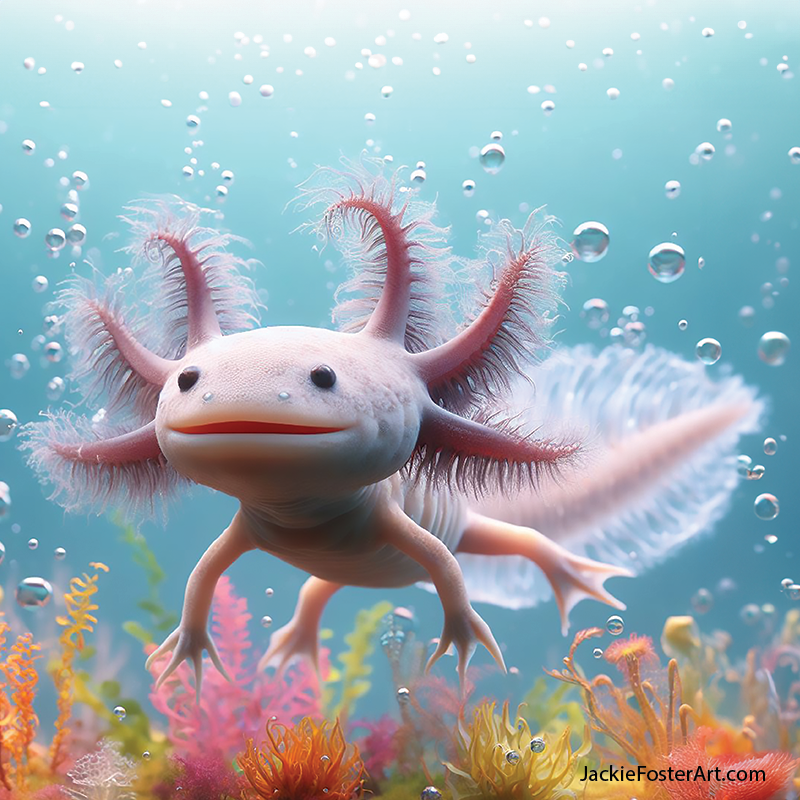
One of the most endearing features of axolotls is their constant “smile.” This appearance is due to the shape of their mouth and their wide heads, which give the illusion of a cheerful expression. Coupled with their lidless eyes and feathery gills, axolotls have a cute and whimsical look that has captured the hearts of people worldwide. Their charming smile has made them popular in memes, animations, and as pets.
They Breathe with Gills and Lungs
Axolotls have a unique respiratory system that includes three methods of breathing:
- External Gills: Their most distinctive feature, the feathery gills extend from the sides of their heads and are rich in blood vessels, allowing efficient oxygen absorption from the water.
- Lungs: They possess rudimentary lungs and can gulp air from the water’s surface, especially if the water is low in oxygen.
- Skin: Axolotls can absorb oxygen directly through their skin, a process known as cutaneous respiration.
This versatility enables them to survive in varying environmental conditions, although they primarily rely on their gills.
Eyes Without Eyelids
Axolotls lack eyelids, meaning their eyes are always open. This feature contributes to their perpetually alert expression and is an adaptation to their aquatic life. Since they do not need to protect their eyes from debris or keep them moist—as eyelids do in terrestrial animals—axolotls have evolved to have lidless eyes. This adaptation enhances their field of vision underwater.
Carnivorous Diet
Axolotls are voracious predators in their aquatic ecosystems. They feed on a diet consisting of worms, insects, mollusks, crustaceans, and small fish. Utilizing a suction mechanism to capture prey, they rapidly expand their jaws to draw food into their mouths. Their feeding habits play a crucial role in controlling insect populations and maintaining the ecological balance of their habitat.
Cultural Icons
In Aztec mythology, the axolotl is linked to the god Xolotl, the deity of fire, lightning, deformities, and twins. According to legend, Xolotl transformed himself into an axolotl to avoid being sacrificed by the other gods, hiding in the water to escape his fate. This mythological connection underscores the axolotl’s significance in ancient Mesoamerican culture and highlights themes of transformation and survival. Today, the axolotl remains a cultural symbol in Mexico, representing resilience and uniqueness.
Native to Mexico
These captivating creatures are native exclusively to the Lake Xochimilco complex near Mexico City. The lakes and canals of Xochimilco provide the cool, high-altitude aquatic environment axolotls need to thrive. Unfortunately, urbanization, pollution, and the introduction of invasive species like tilapia and carp have severely degraded their natural habitat. Axolotls are now listed as critically endangered in the wild. Conservation efforts focus on habitat restoration and captive breeding programs to prevent their extinction.
Important Biology
The axolotl’s unique characteristics make it an invaluable model organism in scientific research. Their large embryos are transparent and develop externally, allowing scientists to observe developmental processes in real-time. Research areas include:
- Regenerative Medicine: Understanding how axolotls regenerate complex tissues could lead to breakthroughs in healing human injuries and diseases.
- Genetics: Studying their genome helps unravel the genetic basis of regeneration and development.
- Evolutionary Biology: Providing insights into neoteny and evolutionary adaptations among amphibians.
The knowledge gained from axolotl research holds promise for advancing medical science and understanding fundamental biological processes.
 Jackie Foster Art