
- They’re nicknamed “sea canaries”
Belugas are incredibly vocal. They chirp, whistle, click, and squawk—so much so that sailors once thought they heard birds underwater. Their voices help them navigate icy waters and stay in touch with their pod. - Belugas can smile and nod their heads
Belugas have unfused neck vertebrae, which means they can turn their heads side to side and up and down. Their flexible lips give them a natural upturned grin, which adds to their friendly, curious expression. It’s no wonder they seem to radiate joy. - They can swim backward
This rare talent among whales helps them navigate tight spaces like icy crevices or shallow estuaries. - They’re built for Arctic life
Belugas live in cold northern waters, and their thick blubber helps them stay warm. Unlike most whales, they don’t have a dorsal fin—an adaptation that allows them to swim beneath thick sheets of sea ice. They can find breathing holes in the ice thanks to their acute sense of hearing. - They turn white over time
Belugas are born gray or brown and gradually lighten as they age. Adults are bright white, which helps them blend into Arctic ice and snow. - Beluga Families
Beluga moms are wonderfully attentive. After an 11- to 15-month pregnancy, a single calf is born—usually in warmer summer waters to help the baby thrive. Moms nurse their babies for up to two years, providing rich, fatty milk that helps them grow quickly. Belugas live in close-knit pods, and caregiving is a group effort. Other adult females—sometimes called “aunties”—and older siblings often help out by swimming alongside the calves, keeping a watchful eye, and even shielding them from danger. This shared caregiving gives moms a chance to rest and feed, while the calves benefit from extra protection and social bonding. - Their Melon is Magical
Their bulbous forehead, called a melon, is flexible and helps them focus the sound for echolocation. It actually changes shape when they make sounds! Using echolocation (their natural sonar), belugas can hunt in the dark, under ice, or in murky waters—making them expert Arctic foragers. Belugas aren’t picky eaters—they enjoy a varied seafood buffet of fish like cod, salmon, and herring, as well as squid, shrimp, and even marine worms. They’re especially skilled at finding food along the ocean floor, using their flexible lips to suck up tasty treats hiding in the sand. - They Shed Their Skin
Every summer, beluga whales head to shallow, warmer coastal waters—not just to socialize, but to molt. Unlike most whales, belugas actually shed the outer layer of their skin. As they rub against gravel, sand, or rocks on the seafloor, old skin sloughs off, revealing a fresh layer beneath. This natural exfoliation helps keep their skin healthy and free of algae or parasites. Large groups often gather during molting season, especially in places like Canada’s Hudson Bay, St. Lawrence River Estuary, and Cunningham Inlet.
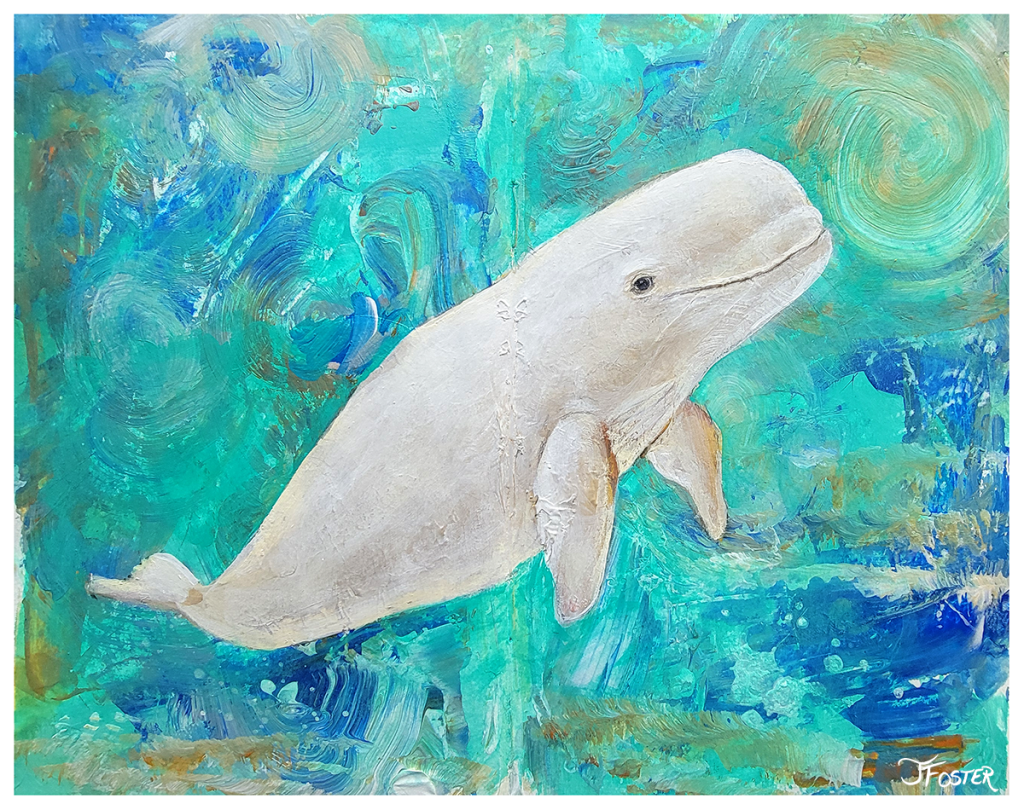
Creating this beluga painting was such a joy, and diving into their world made me appreciate them even more. Nature is the best muse! 🐋🎨
My Beluga Painting Blooper: Watch What Went Wrong
This art project included a funny mistake. Watch how I accidentally gave my beluga the wrong anatomy, how I fixed it with some acrylic magic, and the biology lesson I learned along the way.
Enjoyed this post? Feel free to share it with a fellow art or nature lover.
 Jackie Foster Art